Boat engine maintenance: by hours or by the calendar?
Your manual gives most service items two limits. Here's how to read them, and why a boat that barely moves still needs its service.
On this page
The short answer
Service a marine engine at whichever limit it reaches first: the running hours in the manual, or the time limit beside them. Busy boats reach the hour limit first. Boats that sit for weeks reach the time limit first, because oil, coolant, rubber impellers and filters age even when the engine is off. Work from the schedule for your exact engine model; a rule borrowed from another engine can be wrong for yours.
Ask around the marina when an engine needs servicing and you'll hear a different number of hours from everyone. Each may be right for that person's engine and wrong for yours. Here's how to read the schedule in your own manual.
01Two limits, one due date
Marine engine manuals set most service items with an hour figure and a time limit, and the item is due at whichever comes first. Volvo Penta's support pages, for example, base service intervals on engine hours or elapsed time. Other makers work the same way, with their own numbers.
Which limit you reach first depends on how the boat is used. The illustration compares three common patterns against the same schedule.
Which limit arrives first
Charter boat, out most days
Long hours every week
Due by the hour limit
Weekend boat
A few hours most weekends
Due by the time limit
Boat left for months
Barely runs
Due by the time limit
02Why time counts when the engine is off
It's tempting to think an engine that hasn't run hasn't worn. Several things age on the calendar anyway.
- Used oil holds acids from combustion. Left in a resting engine, it keeps working on bearings and seals, which is why makers ask for an oil change before a boat is laid up.
- A rubber impeller that sits still takes a set: the vanes stay bent the way they were resting, dry out, and can crack on the next start.
- The additives in coolant that protect against corrosion run down over time.
- Water collects in diesel tanks through condensation, and in warm conditions microbes ("diesel bug") can grow where fuel meets water and block filters.
- Hoses, belts and seals harden in a hot engine room whether the engine runs or not.
- Engine anodes corrode whenever there's seawater in the cooling system.
03How to read your service schedule
- Find the operator's manual for your exact engine model and check its revision or date. Schedules change between model years.
- Open the maintenance schedule table. Each row is an item; the columns give the hour and time limits.
- Note both limits for every item, including the ones marked only "check" or "inspect".
- Look for a separate schedule for heavy or unusual use, and ask your technician whether it applies to your boat.
- Write down the date and the hour-meter reading at every service.
- Work out the next due date and the next due hours, and keep both on the service card below.
Treat the generator, gearbox, sterndrive or outboard as separate engines. Each has its own manual, and often its own hour meter.
04What a routine service usually covers
The exact list comes from your manual. These are the items most marine diesel schedules include, and what usually sets their timing.
| Item | Usually timed by | Notes |
|---|---|---|
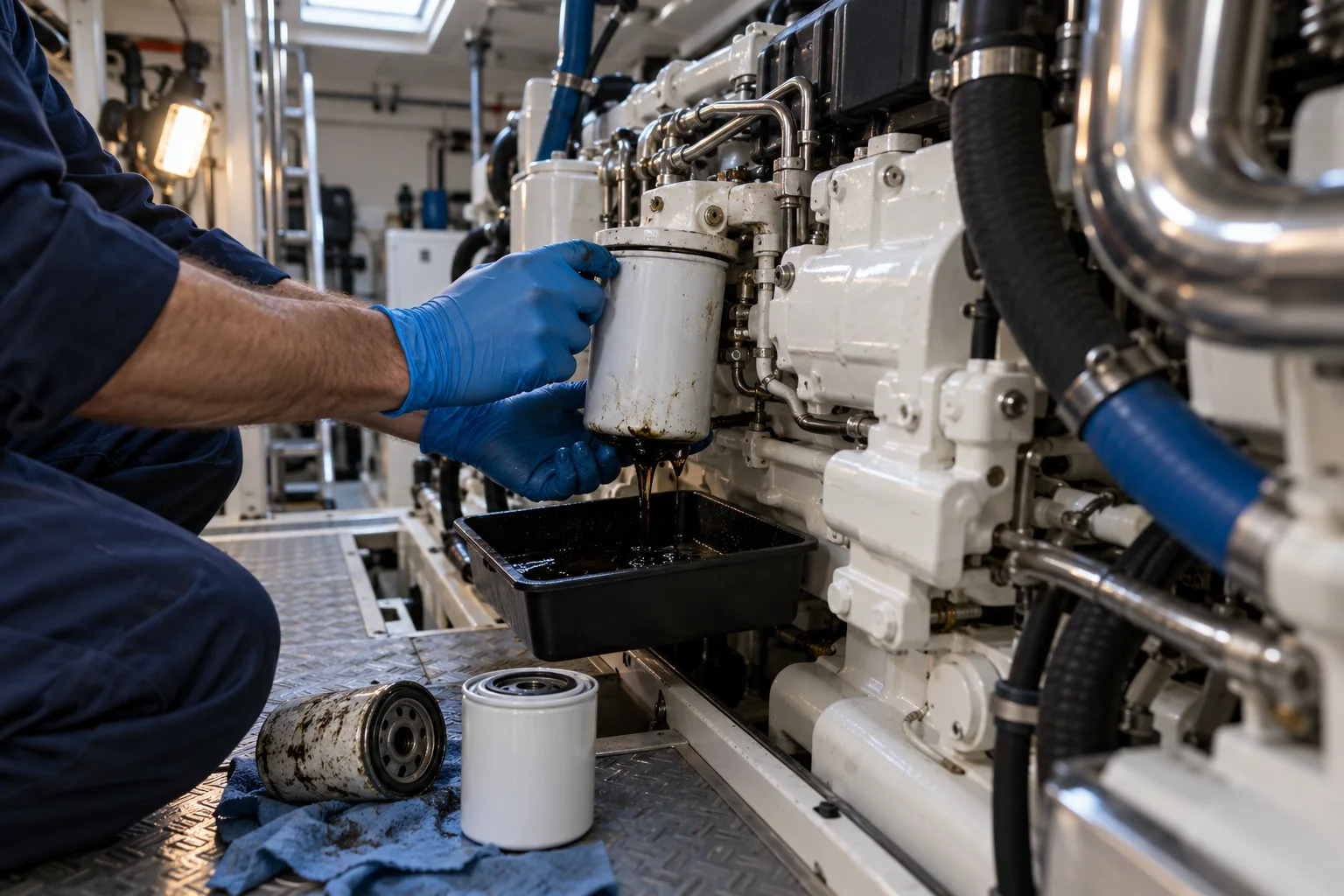
| Engine oil and filter | Hours or time | Often the first item to fall due. |
| Fuel filters and water separator | Hours or time, plus condition | Drain water from the separator bowl between services. |
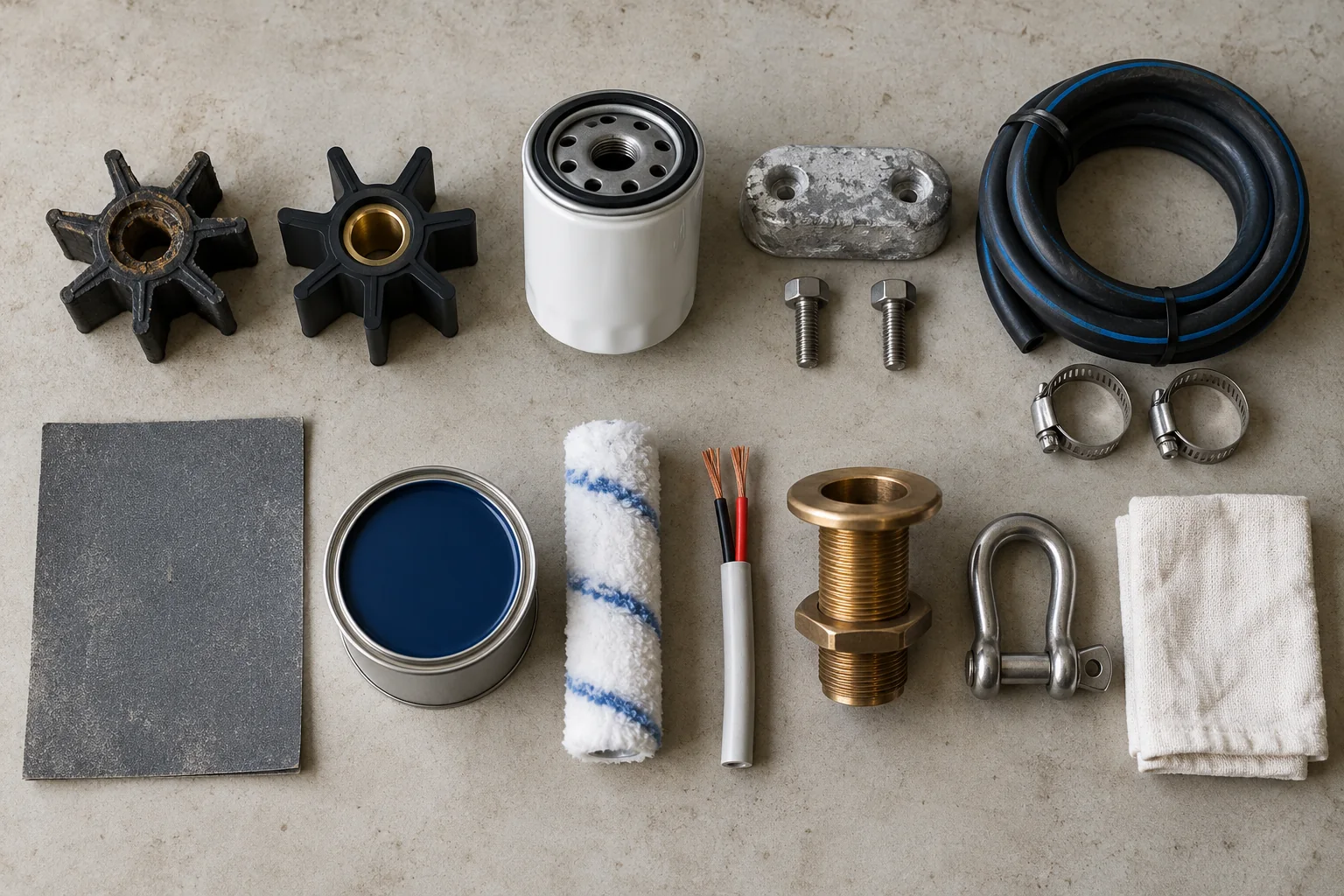
| Raw-water pump impeller | Time or hours, plus condition | Keep a spare on board, and the tools to fit it. |
| Coolant | Mainly time | Additives run down even when hours are low. |
| Heat exchanger and aftercooler | Hours and condition | Warm seawater fouls the seawater side faster. |
| Engine anodes | Condition | Replace once about half has gone. |
| Drive belts and hoses | Condition and time | Check tension and look for cracks. |
| Valve clearances and injectors | Hours | Longer intervals; follow the manual exactly. |
05Keep a service card for each engine
One card per engine, kept with the maintenance log, answers the question every technician asks first: when was it last serviced, and at how many hours?
One card per engine. Next service is due at whichever comes first.
Engine service card
06Signs that can't wait for the schedule
Stop and have the engine checked if you notice any of these, whatever the schedule says.
- Temperature higher than usual, or an overheat alarm
- Weak or no cooling water from the exhaust
- Smoke that's new: white that won't clear, blue, or heavy black
- A new noise or vibration
- Oil in the bilge, or oil that looks milky on the dipstick
- Hard starting, or an engine that won't reach its usual rpm
Our mechanics service Volvo Penta, Yanmar, Caterpillar, MTU, Cummins and MAN engines on board at the berth or on the hardstand. The maintenance checklist covers the rest of the boat.
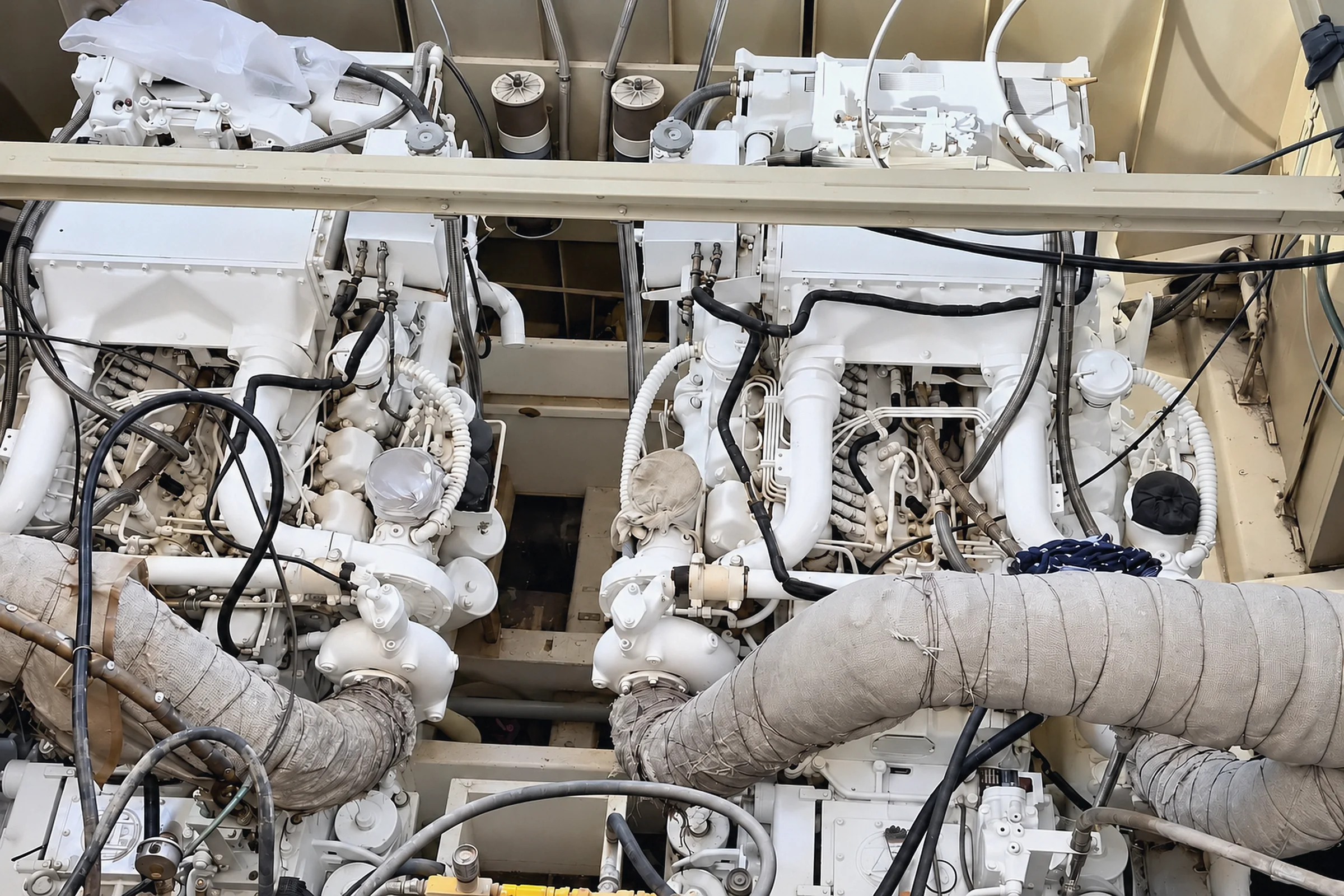 Related serviceMechanical & Hydraulic ServicesServicing, diagnostics and repairs for engines, generators, pumps, steering and hydraulic systems on boats, yachts and working vessels.
07Common questions
How often should a marine engine be serviced?
At the hour limit or the time limit in its manual, whichever comes first. For most boats in Dubai that means at least one service a year, and more often for boats running long hours.
My boat only did 30 hours this year. Does it still need an oil change?
Usually, yes. If the manual's time limit has passed, the oil and filters are due whatever the hours. Check the schedule for your engine model.
Do outboards follow the same rule?
Yes. Outboards have their own schedules with hour and time limits, and most also need regular fresh-water flushing as their manual describes.
Which engines do you service?
Our mechanics service marine engines from Volvo Penta, Yanmar, Caterpillar, MTU, Cummins and MAN, along with generators, pumps and hydraulic systems.